





MON - FRI : 09:00 AM - 4:00 pm

411 Huku Lii Pl. #102

Facial Rejuvenation · Kihei, Maui

My Face Is Starting To Sag. What Can I Do About It?

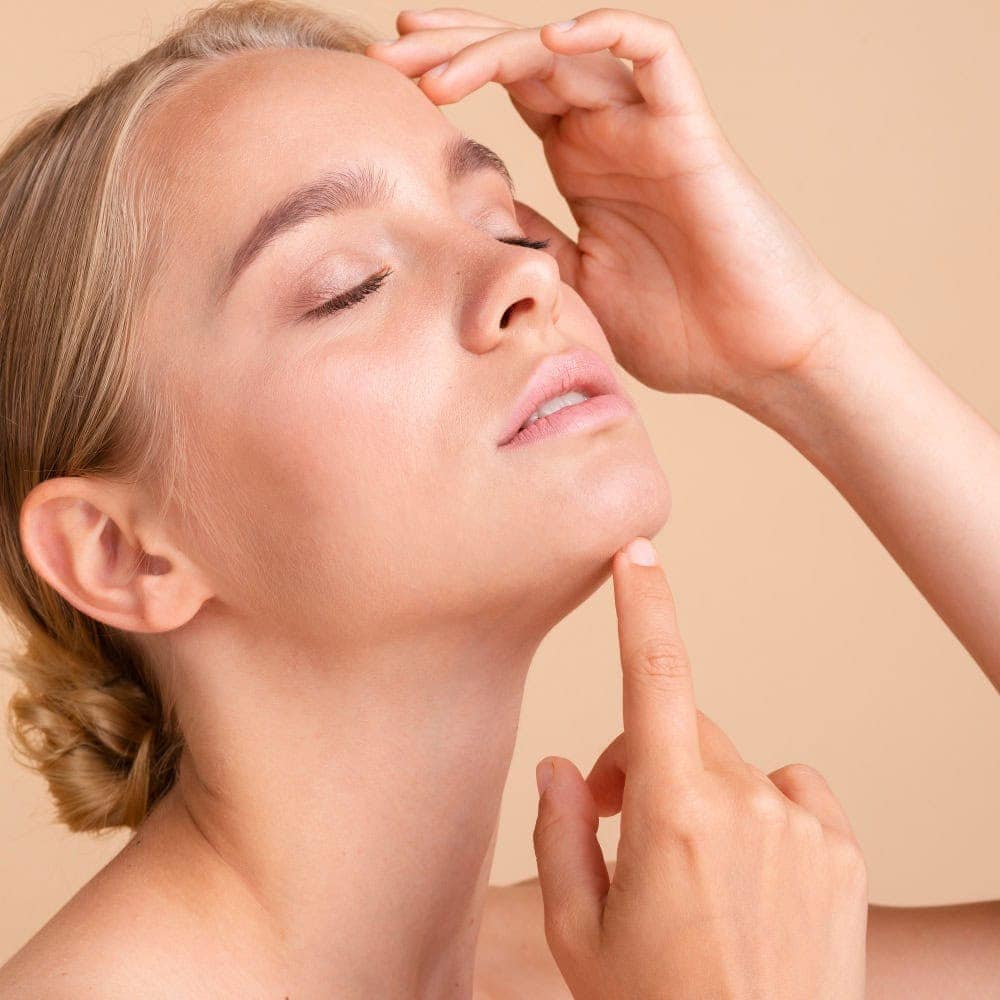
When patients tell me their face is starting to sag, I usually know exactly what they mean. The jawline looks a little softer. Jowls are beginning to appear. The lower face seems heavier, or the face simply does not look as lifted as it once did.
What we casually call “facial sagging” is not one problem. It can come from changes in the skin itself, loss of volume and structural support beneath the skin, changes in the deeper tissues that help hold the face in position—or, very commonly, some combination of all three.
That distinction matters, because these problems do not respond to the same facial sagging treatments.
Emeka B. Okwuje, MD

By Emeka B. Okwuje, MD

Director of Aesthetic & Longevity Medicine, RevitalizeMaui
The Short Answer
“Facial sagging usually results from a combination of skin laxity, loss of facial volume, and changes in the deeper supporting tissues. The appropriate treatment depends on which layer is primarily responsible. Skin tightening treatments can improve laxity, fillers can restore structural support, and PDO threads may reposition selected tissues. More advanced sagging may require surgical evaluation.”

Discover Aesthetic Medical & Longevity Treatments

If your face is starting to sag, the first step is not choosing a procedure. It is figuring out what is actually creating the change you see.
If the dominant problem is skin laxity, facial sagging treatments that remodel collagen and improve skin quality may help. If support has been lost, carefully placed filler or another structural treatment may make more sense. If deeper tissue position has changed, lifting threads may help in selected cases, while more significant repositioning may ultimately require surgery.
Most people have more than one of these changes. The best plan is usually the one that gives each treatment a specific job rather than asking one treatment to solve everything.
Primary changeTreatment goalPossible modalities
Skin qualityImprove firmness and collagenRFMN, resurfacing, regenerative treatments (Sculptra, HDR)
Volume & supportRevolumize fat pads, bony supportHigh G' dermal filler, biostimulatory agents
Structural descentReposition or lift tissuePDO Threads in selected patients; surgery for more advanced laxity
WHY DOES THE FACE START TO SAG?

The Face is a Layered Structure

Facial aging is not simply a matter of skin becoming loose and falling downward. The face is a layered structure. Skin, fat compartments, retaining ligaments, fascia and bone all change over time, and the visible result depends on how those changes interact in a particular person.
When I evaluate facial sagging, I usually break it down into three questions: How much of what I am seeing is coming from the skin? How much is loss of volume or structural support? And how much reflects change in the deeper support system and tissue position?
Two people can both point to a jowl and say, “This is what bothers me,” while needing very different facial sagging treatment plans.
Primary changeWhat changesWhat you may notice
Skin qualityCollagen and elastin declineCrepey skin, fine lines, reduced firmness
Volume & supportFat and bone support diminishHollowing, flattening, deeper folds
Structural descentFacial tissues shift downwardJowls, heavier lower face, neck laxity

When The Problem Is The Skin

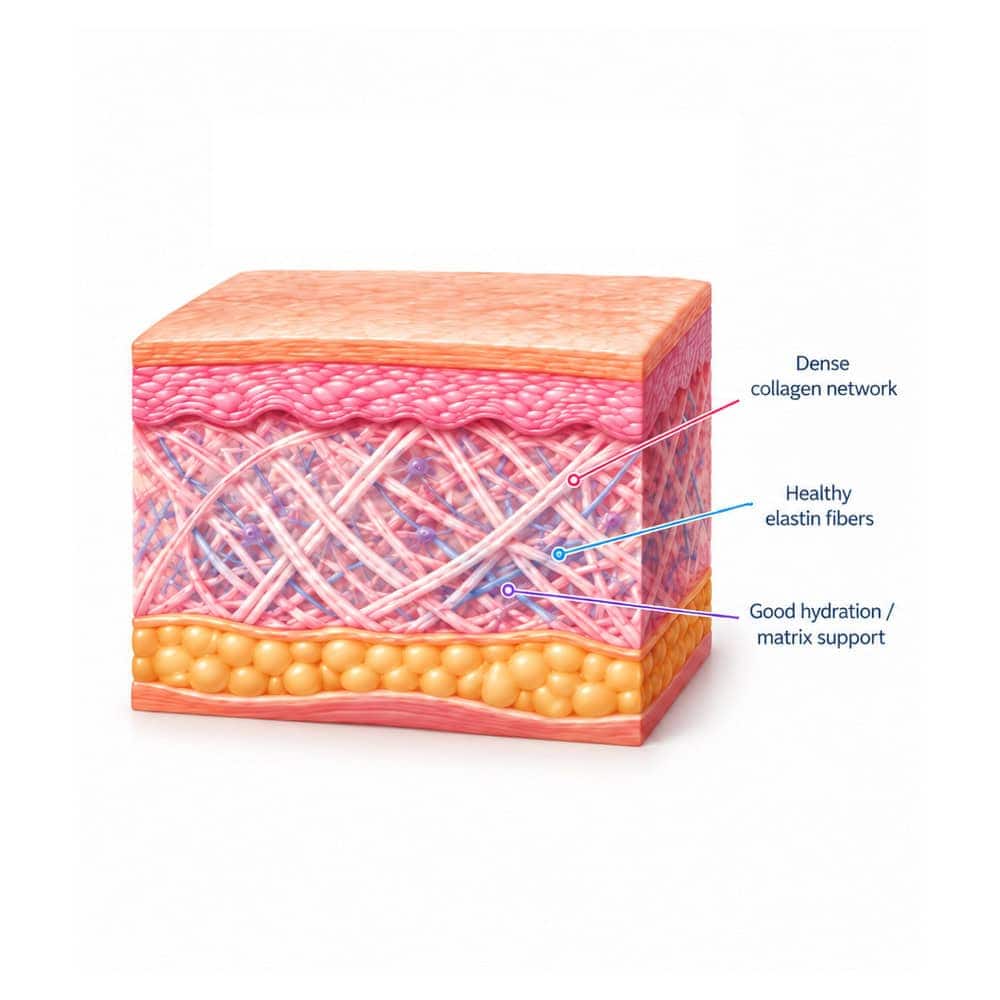
Collagen is one of the main currencies of youthful skin. As collagen declines and becomes less organized with age, the dermis becomes thinner and the skin becomes less resilient. Elastin function changes as well, and years of ultraviolet exposure can accelerate the loss of firmness and recoil.
You can think of it as the difference between a thin sheet of paper and a heavier card. Thin material creases easily and does not have much structural resilience. Healthier, thicker skin has more body and is better able to resist folding and recover its shape.
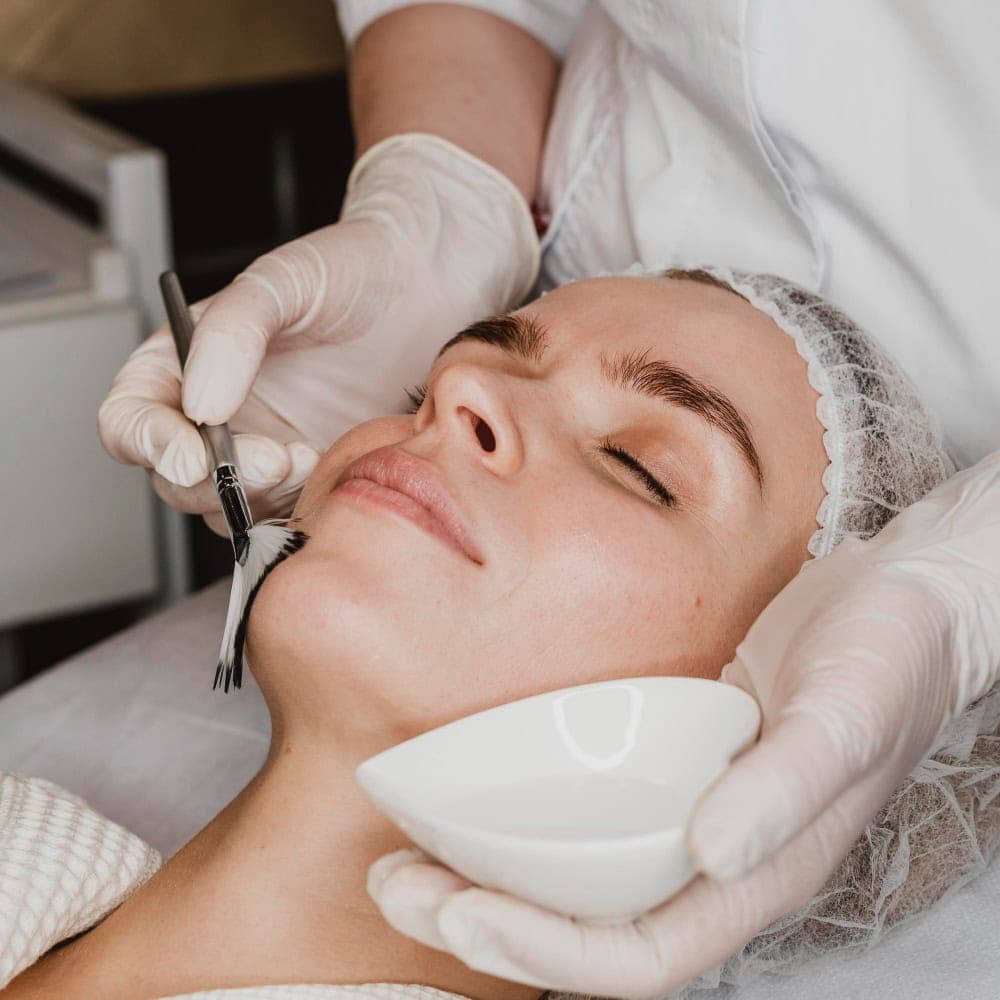
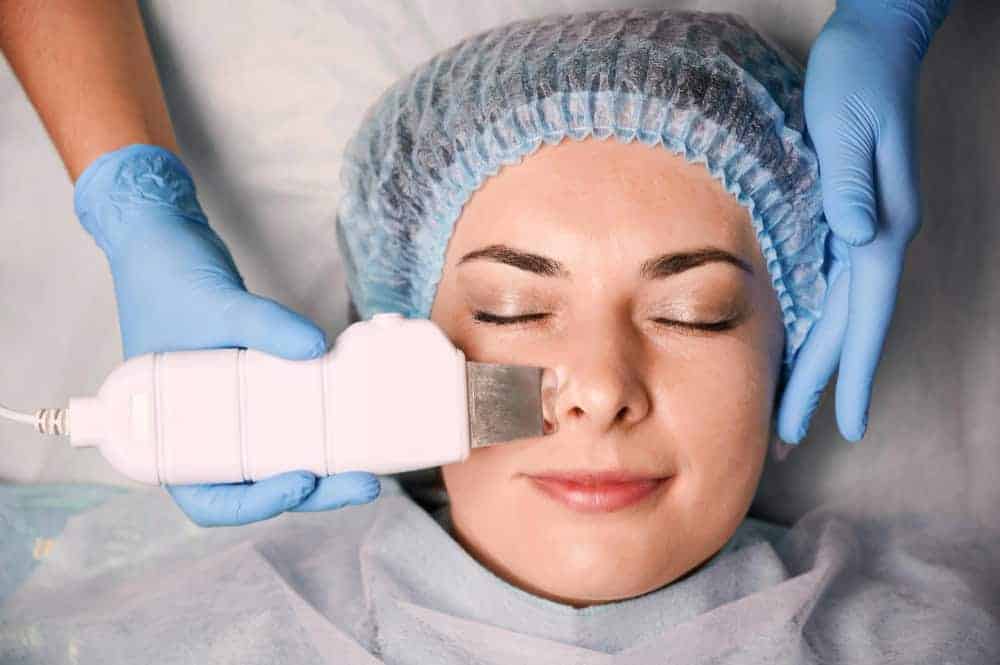
This is where collagen-remodeling treatments can be useful. Depending on the patient, the area being treated, skin type, pigment risk and acceptable downtime, that may include traditional microneedling, RF microneedling, fractional radiofrequency, laser resurfacing or other energy-based remodeling treatments.
At RevitalizeMaui, options may include Pixel8 RF microneedling, Venus Viva nanofractional RF, fractional laser resurfacing and Pico-based remodeling protocols. In selected patients, we also combine modalities—for example, our BIOLIFT approach combines RF microneedling, PRP and Pico LADD to address skin quality more broadly.
But there is an important limitation:
Tighter skin is not the same thing as lifted tissue.
A facial sagging treatment can improve firmness, texture, thickness and recoil without meaningfully repositioning a jowl. This is one of the reasons I am cautious when nonsurgical skin-tightening procedures are described as though they are equivalent to a facelift. They are not doing the same job.

When The Problem Is Loss Of Volume And Support

Volume loss does more than create hollows. It changes the support and proportions of the face.
Facial fat compartments do not all age in the same way. Some lose volume, others can become relatively more prominent, and the facial skeleton itself gradually remodels. When support is lost in key areas, folds may deepen and the lower face can begin to look heavier even though the problem is not simply “too much skin.”
This is where filler can be extremely useful—when it has a clear structural job. I do not use filler to chase every line. I use it to restore support where support has actually been lost, and the best injection point is often not directly in the fold someone is trying to improve.
A lower-face fold, for example, may partly reflect loss of support higher or more laterally in the face. Simply filling the fold can add weight without addressing the reason it became prominent. Done repeatedly, that approach can change facial proportions and create the overfilled appearance many patients are trying to avoid.
The goal is not to make the face bigger. It is to restore selected support, preserve proportion and use the smallest amount of volume that meaningfully improves the anatomy we are trying to treat.

When The Deeper Support System Has Changed

The face also has a deeper support system. Retaining ligaments and fascial structures help maintain the relationship between the soft tissues and the underlying skeleton. As those structures and the tissues around them change with age, tissue position can shift. Jowls become more visible, the jawline becomes less defined and the lower face may appear heavier.
At this point, treating individual lines often stops making sense. The question becomes whether enough of the problem can be improved by restoring support, whether selected tissue can be modestly repositioned, or whether the amount of change is beyond what a nonsurgical facial sagging treatment can reasonably accomplish.
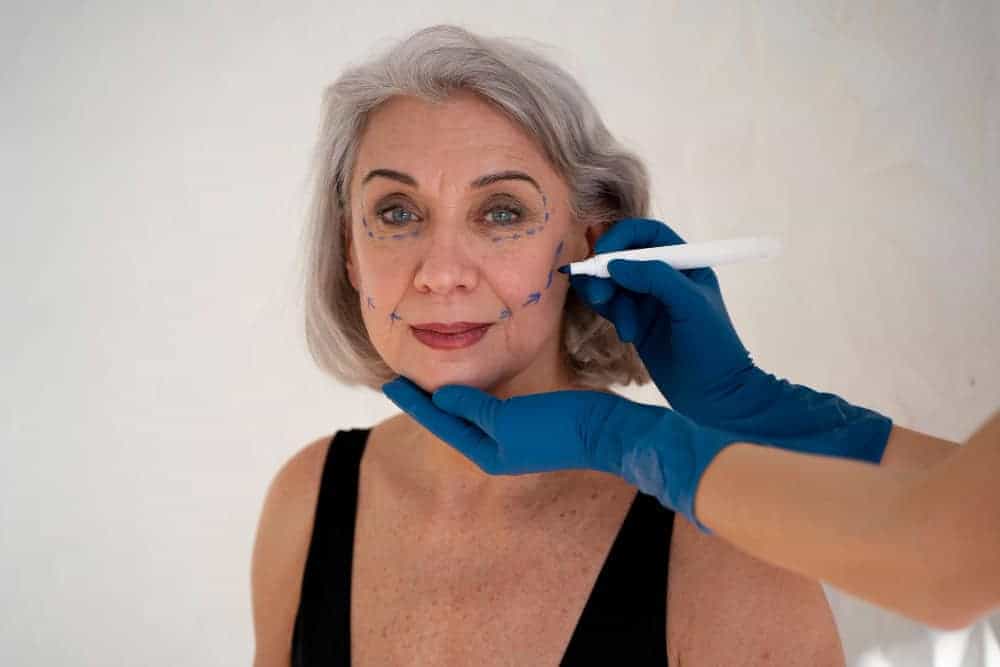
Filler can restore volume and improve support, but it does not tighten retaining ligaments. Lifting threads can reposition selected tissue in appropriately chosen patients, but they do not recreate what a surgical facelift does.
This distinction is important because the more tissue that truly needs to be repositioned, the less convincing a nonsurgical result tends to become.

When Do Lifting Threads Make Sense?

Lifting threads can be useful when the degree of laxity is modest, the tissue is reasonably mobile and the patient understands that the expected correction is also modest.
They are less predictable in a very heavy lower face, with substantial skin redundancy, or when a large amount of tissue needs to be repositioned. In those situations, adding more threads does not necessarily create a better result.
A good nonsurgical plan begins with a realistic understanding of what the anatomy will allow. There comes a point where choosing not to have surgery means accepting a smaller result. That can be a perfectly reasonable choice—as long as the expectation is clear.

Can Removing Facial Fat Help Sagging?

Sometimes—but this requires judgment.
True localized excess fat can contribute to a heavy contour, particularly beneath the chin or in selected areas of the lower face. Reducing that fat may improve definition. But volume is also part of what supports the overlying skin.
If the skin is already thin, loose or poorly elastic, removing volume can make that looseness more obvious. What initially looked like a “fat problem” may partly have been a skin-quality or support problem.
So before I remove facial fat, I want to know how the skin is likely to redrape once that volume is gone. Taking something away is not automatically rejuvenating simply because the face looks heavy.
Combination Treatment for Facial Sagging

How Does CO₂ Resurfacing Work?

Remove the Damage. Renew the Skin.

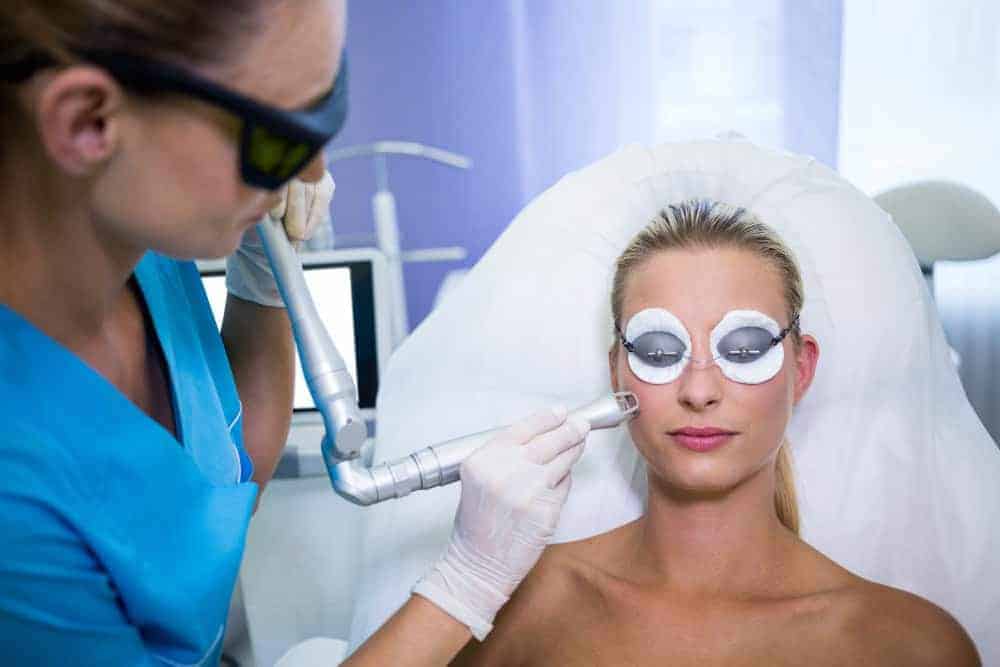
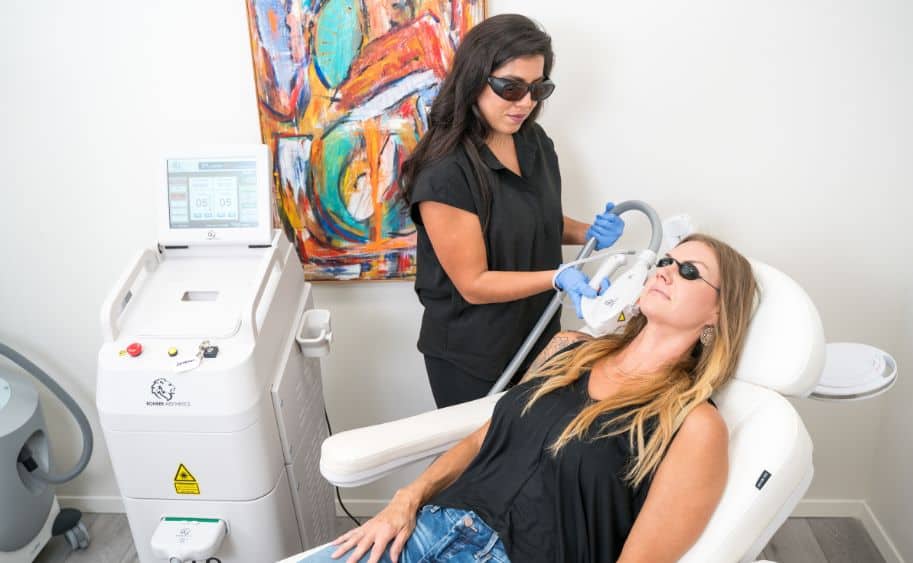
The secret to CO₂ laser resurfacing is surprisingly simple: its primary target is water.Because skin cells contain abundant water, precisely directed laser energy can vaporize targeted areas of damaged tissue, including skin affected by wrinkles, rough texture, and years of sun exposure. Think of it as a controlled renewal of the skin. Some damaged tissue is removed immediately, while other treated tissue sheds during healing. Healthy skin cells then regenerate the surface, replacing damaged tissue with fresh, renewed skin. **But the real power of CO₂ resurfacing goes beyond the surface.** The laser also delivers controlled heat into the dermis, stimulating a healing response that promotes new collagen formation and remodeling. This process continues for months after treatment, helping improve skin firmness, thickness, and the appearance of established wrinkles. **It's this combination of surface renewal and deeper collagen remodeling that makes CO₂ resurfacing so effective for aging and damaged skin.** CO₂ laser energy is absorbed by water in the skin, precisely removing areas of damaged tissue while generating controlled heat in deeper layers. This combination encourages the skin's natural healing response and collagen remodeling, helping improve wrinkles, rough texture, and selected scars.
Deciding What To Treat First

One Technology. Four Different Possibilities.

Your Skin Is Only Half the Equation.

One of the greatest advantages of CO₂ resurfacing is its versatility. By precisely adjusting laser energy, treatment density, and depth, we can address very different concerns—from thin, crepey eyelid skin to deeper wrinkles and stubborn acne scars. For eyelid lifting, controlled tissue removal and contraction can reduce excess folds and hooding. Around the eyes, resurfacing diminishes persistent crow's feet. Across the face, it addresses established wrinkles and sun damage. For acne scars, deeper fractional treatment stimulates remodeling within damaged tissue. But the most important variable is you. How much improvement are you hoping to achieve? How much downtime can you accommodate? How intensive a treatment are you comfortable with? The power of CO₂ isn't simply how much skin it can remove. It's the ability to tailor treatment to your skin, your goals, and your lifestyle—balancing the improvement you're seeking with the recovery it requires.

What To Do If My Face Is Sagging?

What Is Recovery Really Like?

Greater Intensity. Longer Recovery? Not Necessarily

CO₂ laser resurfacing has traditionally been associated with impressive results—but also significant downtime. More aggressive treatments often meant longer healing, greater inflammation, and more time away from everyday activities. **Advances in ultra-pulsed CO₂ technology are changing that relationship.** UltraPulse delivers high-powered laser energy in extremely short pulses—shorter than the skin's thermal relaxation time. This allows substantial tissue ablation with controlled, localized coagulation while limiting unwanted heat spread into surrounding skin.

The advantage? More precise treatment of damaged tissue, with less unnecessary thermal injury that can contribute to prolonged healing. At RevitalizeMaui, we take this a step further by combining carefully selected laser settings with customized pre- and post-treatment protocols designed to support healing, manage inflammation, and make recovery more comfortable. Some downtime remains part of the process. Redness, swelling, peeling, and sensitivity are expected, and recovery varies with treatment intensity, treatment area, and individual healing. **Our goal is simple: Achieve the greatest meaningful improvement with the least downtime reasonably possible.**

Facial Rejuvenation Approach

When Will I See Results—and How Long Can They Last?

The Snowball Effect

The first visible changes begin as damaged tissue gives way to renewed skin. But some of the most important improvements happen gradually, beneath the surface. Over the following months, collagen remodeling continues. Skin can become firmer and smoother, established wrinkles may soften further, and selected acne scars can become less noticeable as the underlying tissue remodels.

Unlike treatments that require frequent maintenance to preserve a temporary effect, improvements from CO₂ resurfacing can remain visible for years. Results depend on the concern being treated, treatment intensity, and individual healing. Your skin will continue to age, and deeper scars may require additional sessions. For patients seeking more than another temporary fix, CO₂ resurfacing offers something remarkable: skin that can continue improving for months, with results that may last for years.

Frequently Asked Questions

Can skin tightening get rid of jowls?
Skin tightening can improve firmness and recoil, particularly when laxity is mild. It generally does not reposition deeper tissue to the degree a surgical lift can. Whether it improves a jowl depends on how much of that jowl is actually being created by the skin versus changes in volume and deeper support.
Filler can restore lost volume and improve structural support in selected areas. That can improve facial contour and sometimes reduce the appearance of folds or early jowling. It does not tighten retaining ligaments or reproduce a surgical facelift, and adding excessive volume can make the lower face look heavier rather than more lifted.
Lifting PDO threads can create modest repositioning in carefully selected patients. Results are generally more convincing when laxity is limited and the tissues are not excessively heavy. They are not a substitute for surgery when substantial tissue repositioning or skin removal is required.
RF microneedling can improve skin quality, collagen remodeling and firmness. It can be very useful when declining skin quality is an important part of the problem. It should not be confused with a procedure that physically repositions significant amounts of deeper tissue.
It can if true excess fat is the main reason the contour looks heavy and the skin has enough elasticity to redrape well. In thin or lax skin, removing volume can sometimes make looseness more apparent, which is why the skin and support underneath it need to be evaluated first.
Not necessarily. Early or modest jowling may be improved with nonsurgical treatments when the anatomy is favorable. As the amount of tissue that needs to be repositioned increases, surgery becomes more likely to produce the degree of correction a patient is looking for.

Consultation

If facial sagging, jowls or loss of jawline definition is starting to bother you, the most useful first question is not “Which facial sagging treatment should I book?” It is “What is actually causing the change I see?”
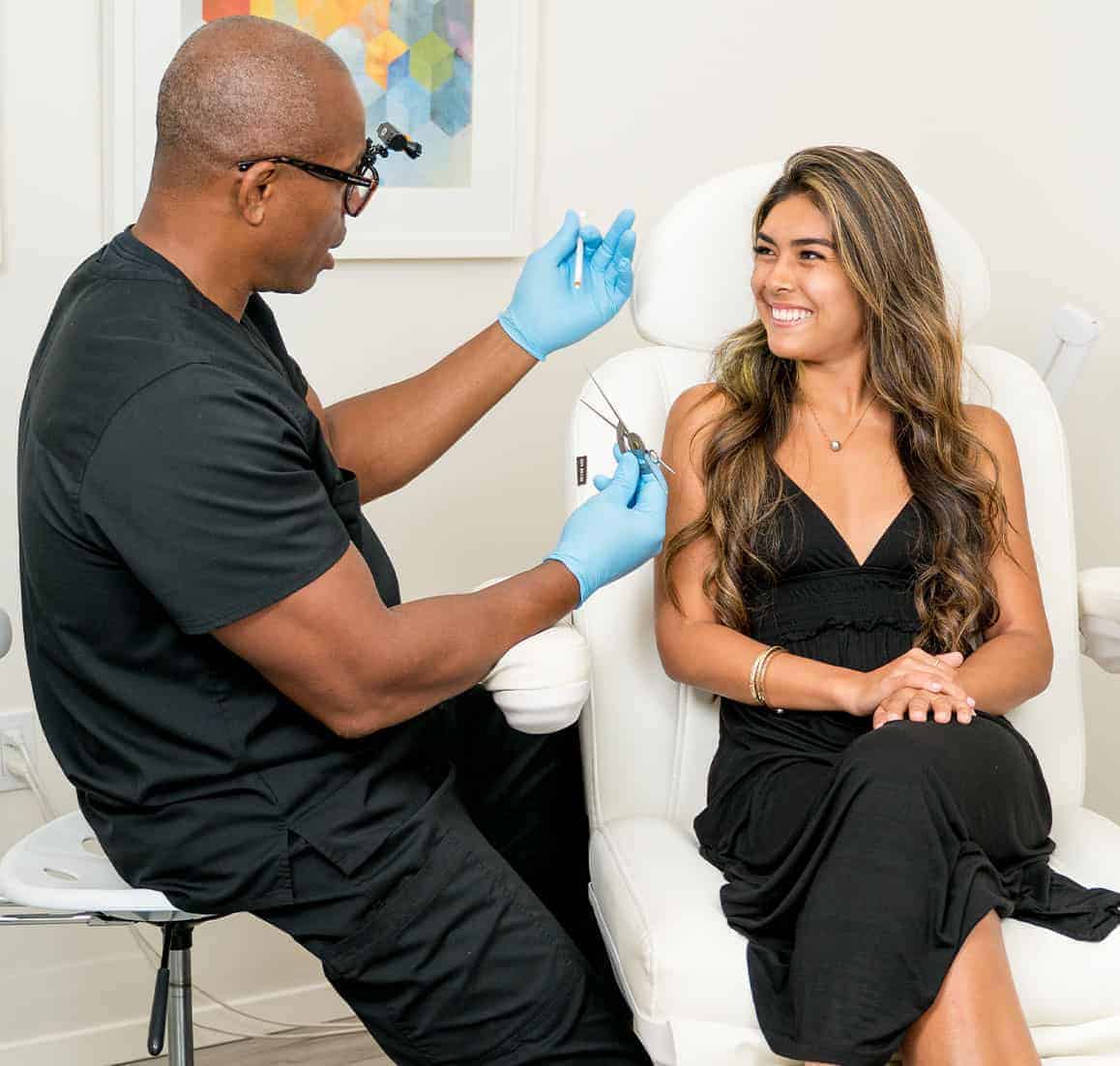
At RevitalizeMaui in Kihei, our aesthetic consultations are designed to answer that question first. We evaluate the skin, facial volume and support, tissue position and the overall proportions of the face before recommending a treatment plan.
The objective is a thoughtful, individualized approach to facial rejuvenation—with a clear understanding of what each treatment can accomplish, what it cannot, and when doing less may produce the better result.

Treatments for Sagging Skin

Mini Face Lift Jowls

Mini Face Lift Jowls

Skin Remodeling Maui

Pdo Thread Lift

Co2 Laser Treatment

Co2 Laser Treatment

Pixel8 RF Microneedling

logo